

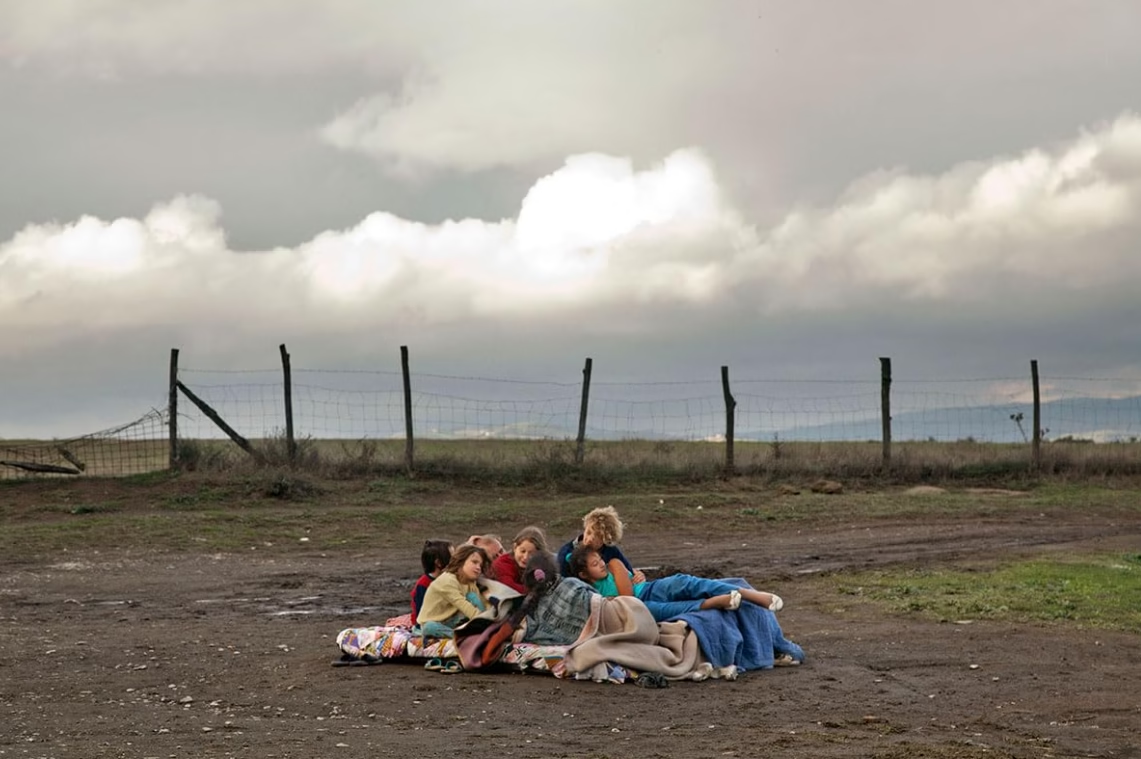
Alice Rohrwacher’s The Wonders moves like a slow current, carrying with it the weight of fading traditions and the quiet defiance of those who try to hold onto them. It is a film that resists urgency, unfolding in fragments of everyday life, where nothing extraordinary happens and yet everything is on the verge of disappearing.
At the center of it all is Gelsomina, played with quiet intensity by Maria Alexandra Lungu. She belongs to a family of beekeepers, living in a crumbling countryside where the old ways persist despite an encroaching world that no longer values them. Her father, played by Sam Louwyck, is a man who clings to his beliefs with the stubbornness of someone who knows he is losing. Monica Bellucci’s Milly Catena arrives like an apparition, a vision of television gloss promising to turn the rustic into spectacle. The game show Countryside Wonders is a parody of authenticity, a grotesque attempt to package a disappearing world for an audience that will never understand it.
The film follows the rhythms of this family—Gelsomina and her three younger sisters, their weary mother (Alba Rohrwacher), and their father, Wolfgang, who rules with a mixture of love and inflexibility. They live on a farm in Umbria, tending bees, extracting honey, and struggling to make ends meet. The work is hard, the future uncertain, but there is still an unspoken order to their days. That order is disrupted by two arrivals: the television crew, scouting contestants for their kitschy rural beauty pageant, and Martin, a German delinquent sent to the farm as part of a rehabilitation program.
Gelsomina, caught in the space between childhood and adulthood, is drawn to both—enchanted by the elegant, otherworldly Milly Catena and fascinated by the silent, mysterious Martin. When she secretly enters the family in Countryside Wonders, she breaks an unspoken rule of their household: their way of life is not meant to be displayed, not meant to be turned into entertainment. The tension simmers beneath the surface—between father and daughter, between tradition and modernity, between the impulse to preserve and the quiet urge to escape.
Rohrwacher does not romanticize this world, nor does she condemn it. Instead, she lingers in its textures—the buzzing of bees, the weight of humid air, the rhythm of hands at work. The camera, often handheld, moves with an intimacy that feels almost like memory, capturing the tension between stillness and change. There is a quiet sadness in the way the bees—both real and symbolic—begin to disappear, a reminder that nothing lasts, no matter how fiercely one tries to preserve it.
Like Happy as Lazzaro, The Wonders does not build toward resolution. It exists in a liminal space, somewhere between realism and fable, between past and present. The family’s fortunes do not dramatically rise or fall; no great upheaval transforms their lives. The game show is neither salvation nor disaster—it is simply another episode in a world that keeps turning, indifferent to human desire.
Rohrwacher’s cinema breathes in the spaces between moments, in the hesitation before a decision, in the glance that carries more weight than words. It is not a story about nostalgia but about the inevitable passing of time, about the things that slip through one’s fingers even as they are being held. The Wonders is a film about inheritance—what is passed down, what is lost, and what remains, flickering at the edges of memory.
-
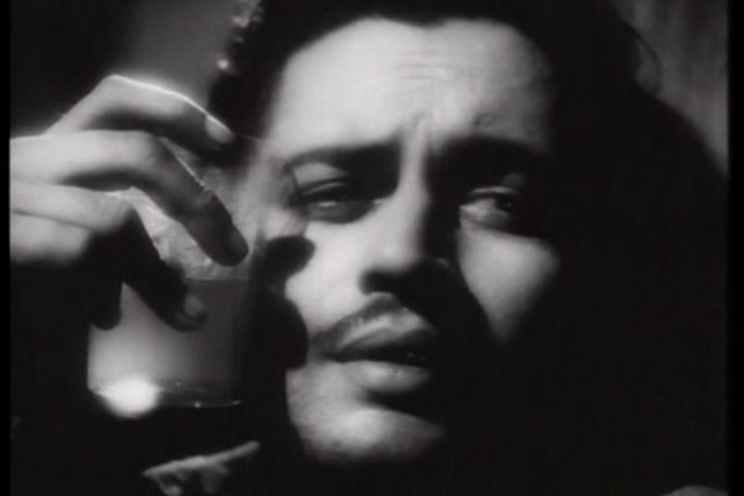
What Is the Worth of a Broken Dream? Remembering Guru Dutt at 100
A hundred years have passed since the birth of Guru Dutt, and still, his films feel like letters we forgot to answer. In an industry that danced to easy rhythms of romance and spectacle, his cinema stood apart—quieter, heavier, filled with silences and shadows that refused to fade. He did not give us heroes who…
-

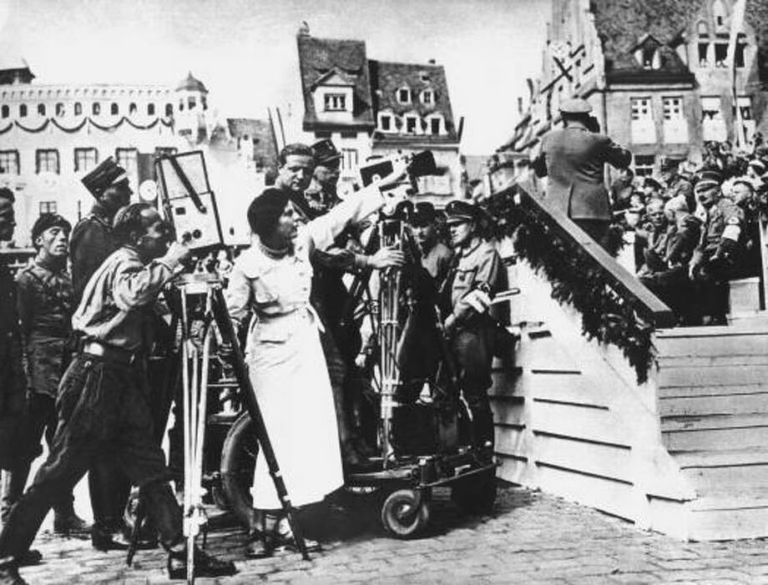
🎬 Triumph, Edited: Cutting Reality for the Reich
Leni Riefenstahl, Hitler, and the Making of Fascist Masterpiece Fade in. A plane hums above the clouds.Below: Nuremberg.A medieval city dressed in red and black.Flags ripple like war drums.Crowds assemble, eyes fixed skyward. From the heavens descends a man.Not a soldier. Not a chancellor.But a myth. Adolf Hitler lands.And with him, a new kind of…
-

“Melancholia: Lars von Trier’s Opera of Cosmic Despair”
Lars von Trier’s Melancholia begins and ends with the end—both of the world and of the illusions we cling to. It’s a symphony of despair and cosmic indifference, a film that examines the inner devastation of the human spirit as it plays out against the vast, uncaring expanse of the universe. With its meticulous structure,…