


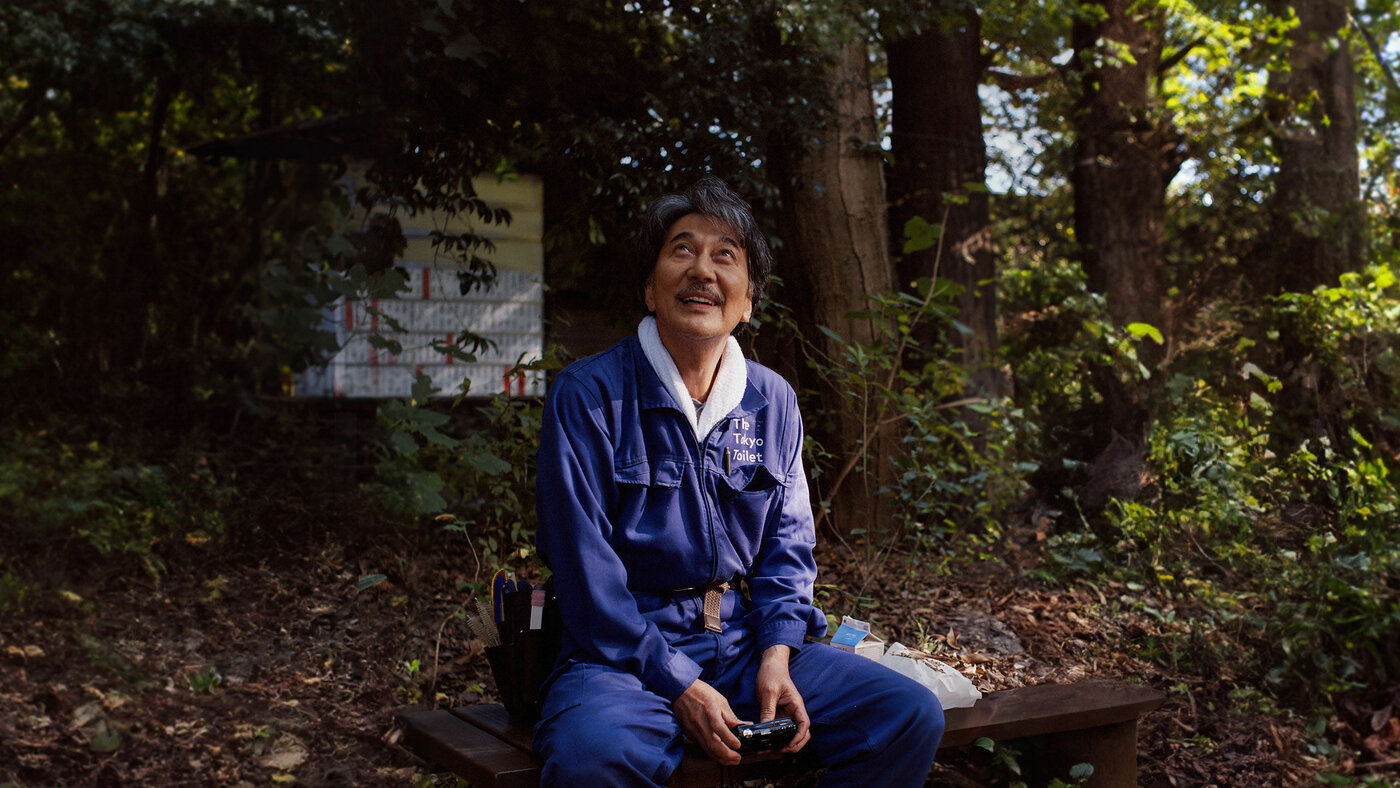
Perfect Days delves into the profound beauty hidden within life’s simplicity, a theme that runs as a golden thread through Wim Wenders’ body of work. The film unfolds as a gentle meditation on routine, solitude, and the quiet connection between human existence and the world around it. At its heart is Hirayama, played with breathtaking subtlety by Koji Yakusho, a man who finds meaning not in grand gestures or ambitions but in the textures of daily life—cleaning public restrooms, capturing glimpses of nature through a camera, or listening to the sounds of a familiar cassette player. These moments are celebrated as small acts of transcendence, highlighting the universal human longing for presence and purpose.
Wenders, long regarded as a master of cinematic existentialism, continues his exploration of the individual’s journey in a world increasingly defined by disconnection. Films such as Paris, Texas and Wings of Desire have previously grappled with themes of identity, belonging, and the search for meaning amidst alienation. In Perfect Days, this exploration takes a gentler turn, presenting a protagonist who has already embraced the richness of his seemingly uneventful life. Hirayama’s daily rituals become akin to spiritual practices, emphasizing a sense of oneness with his surroundings and an awareness of the extraordinary within the ordinary.
Tokyo, with its unique blend of bustling urbanity and quiet introspection, mirrors this philosophy, becoming more than a backdrop—it transforms into a character. Wenders’ direction reveals his deep respect for Japanese culture and its capacity to elevate the mundane into the sacred, mirroring his own ability to capture fleeting beauty with his camera.
Adding to the excitement surrounding Perfect Days is the news of Wim Wenders’ forthcoming visit to India for a retrospective of his works. This visit not only honors a visionary filmmaker but also presents an opportunity to reflect on the philosophical underpinnings of his cinema: the interplay of human fragility and resilience, the significance of connection in an isolated world, and the transformative power of stillness. In Perfect Days, Wenders once again reminds us that life’s most profound truths are often hidden in the quietest places.