




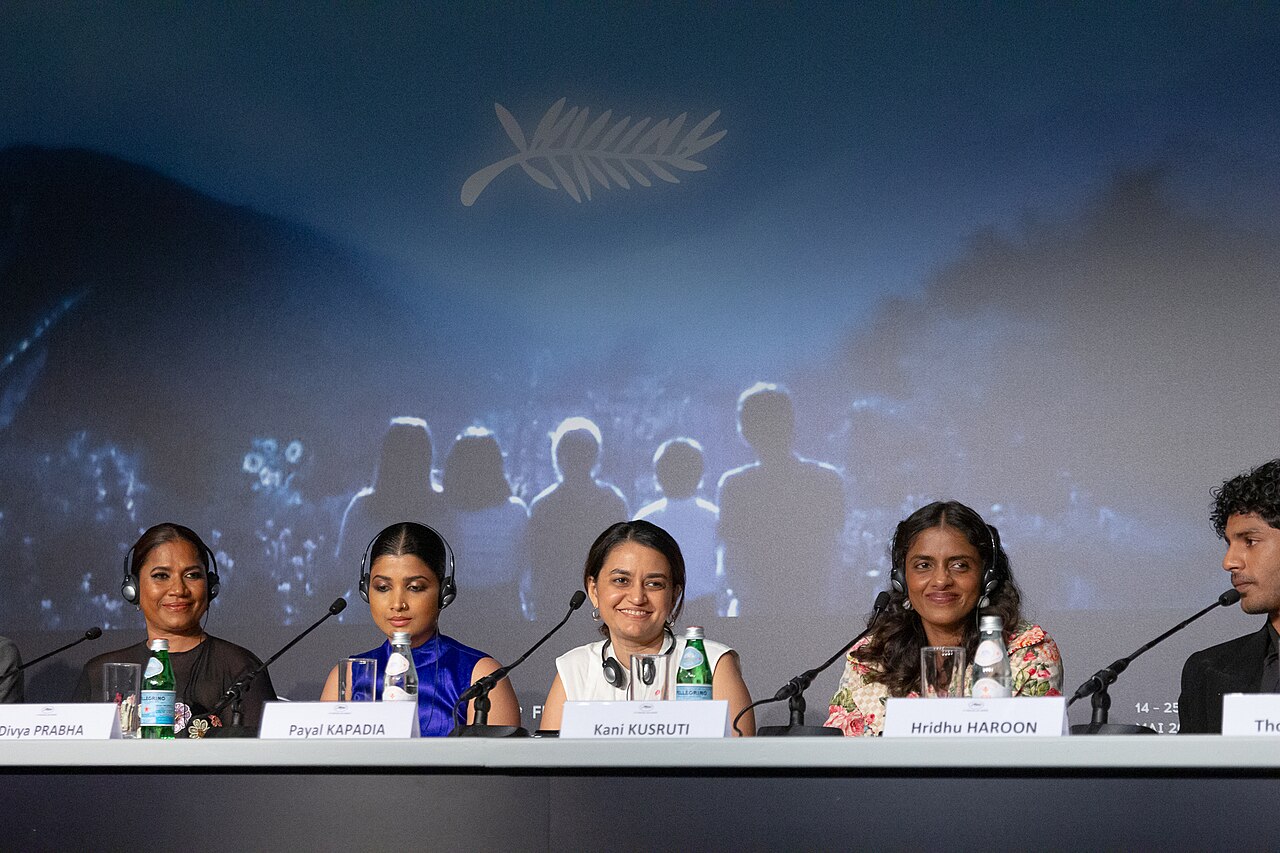
Payal Kapadia’s All We Imagine as Light presents itself as an intimate exploration of longing and companionship, but beneath its delicate surfaces lies a fundamental flaw—an absence of the very force that shapes human existence: work. Cinema, like life, cannot be sustained on emotions alone. Love, longing, and personal relationships may be compelling, but they do not exist in isolation. It is through labor, through the engagement with materials, space, and physical reality, that human beings develop not just their world but their own consciousness. This film, however, seems uninterested in that essential truth.
The Neglect of Work and Space
Set in a hospital, the film has a rich environment at its disposal—one filled with movement, responsibility, exhaustion, and the complex interplay between care and machinery. Yet the hospital remains merely a backdrop, an aesthetic frame for personal drama rather than an active force in shaping the characters. The daily rhythms of medical work, the handling of bodies, the presence of medicine, the weight of duty—none of these elements are meaningfully explored. The hospital is treated as an abstraction, stripped of its function, its pressures, and its physical demands.
This is where the film falters. Work is not an incidental part of life; it is the foundation of human progress. Man developed his brain not through love and sex, but through labor—the struggle to shape his environment, to control nature, to build and understand. A film that ignores this reality risks becoming untethered, floating in sentimentality rather than engaging with the structures that define existence.
The Indian Hangover of Acting, Dancing, and Music
Indian cinema, whether mainstream or independent, has long been driven by the excess of performance. Acting, dancing, and music dominate the screen, often replacing the deeper cinematic possibilities of space, rhythm, and material interaction. This tradition, while fantastic in its own right, raises the question: what happens to a film when it is stripped of these elements but does not replace them with anything substantial?
This is the crisis of All We Imagine as Light. It does not rely on spectacle, yet it still leans entirely on acting—on the idea that human emotion, when carefully framed, is enough to sustain a film. But performance alone is not cinema. Without a tangible relationship to work, space, or the physical world, acting becomes just another aesthetic choice rather than a lived experience.
A hospital is not just a place where emotions unfold—it is a world of precision, exhaustion, and repetition. A film set is not just a background for storytelling—it is a factory of moving parts, where labor is what allows stories to be told. But this film, like so many others, reduces setting to mere decoration, missing the opportunity to let it shape meaning.
Cinema Beyond Emotion
Much of the film’s storytelling depends on personal relationships—on glances, silences, and restrained expressions. But without the grounding force of labor and physical reality, these emotions feel weightless. A character’s inner life is not separate from their work; it is shaped by it. The exhaustion of long shifts, the repetitive precision of medical tasks, the burden of care—these should have been integrated into the film’s texture, making the characters’ struggles more than just personal dilemmas.
Cinema is not just about telling stories; it is about constructing meaning through space, movement, and interaction with the material world. Here, the characters drift, but they do not build. They exist, but they do not transform. The film presents life as a series of emotions detached from the very forces that make those emotions possible.
The Illusion of Depth
There is a certain expectation that independent cinema will provide a more reflective, layered engagement with life. But true reflection requires more than just quietness and slow pacing—it demands an understanding of the structures that shape human existence. A film that does not acknowledge the weight of work, the discipline of labor, and the material reality of survival cannot fully capture the complexity of human life.
All We Imagine as Light lingers on fleeting emotions but does not root them in anything tangible. It observes, but it does not engage. It touches on life, but it does not grasp the forces that shape it. Without that weight, the film remains suspended—an image without substance, a moment without history, a story without the foundation that gives it meaning.




👍👍